
MAG Theatron System Design Tips
Learn how to design a high-performance MAG Theatron home cinema system, including speaker layout, placement, SPL coverage, subwoofer integration and professional calibration
Key takeaways
- Select MAG Theatron speakers according to room size, listening distance and required SPL.
- Position the LCR channels behind an acoustically transparent screen where the cinema design allows.
- Design surround and overhead channels for consistent coverage across the complete seating area.
- Use strategically positioned multiple subwoofers or engineered bass arrays to improve low-frequency consistency.
- Complete the system with professional DSP calibration and verification
Designing a high-performance home cinema involves more than selecting powerful speakers. Room dimensions, seating layout, listening distance, speaker placement, SPL capability, subwoofer integration and system calibration all need to work together.
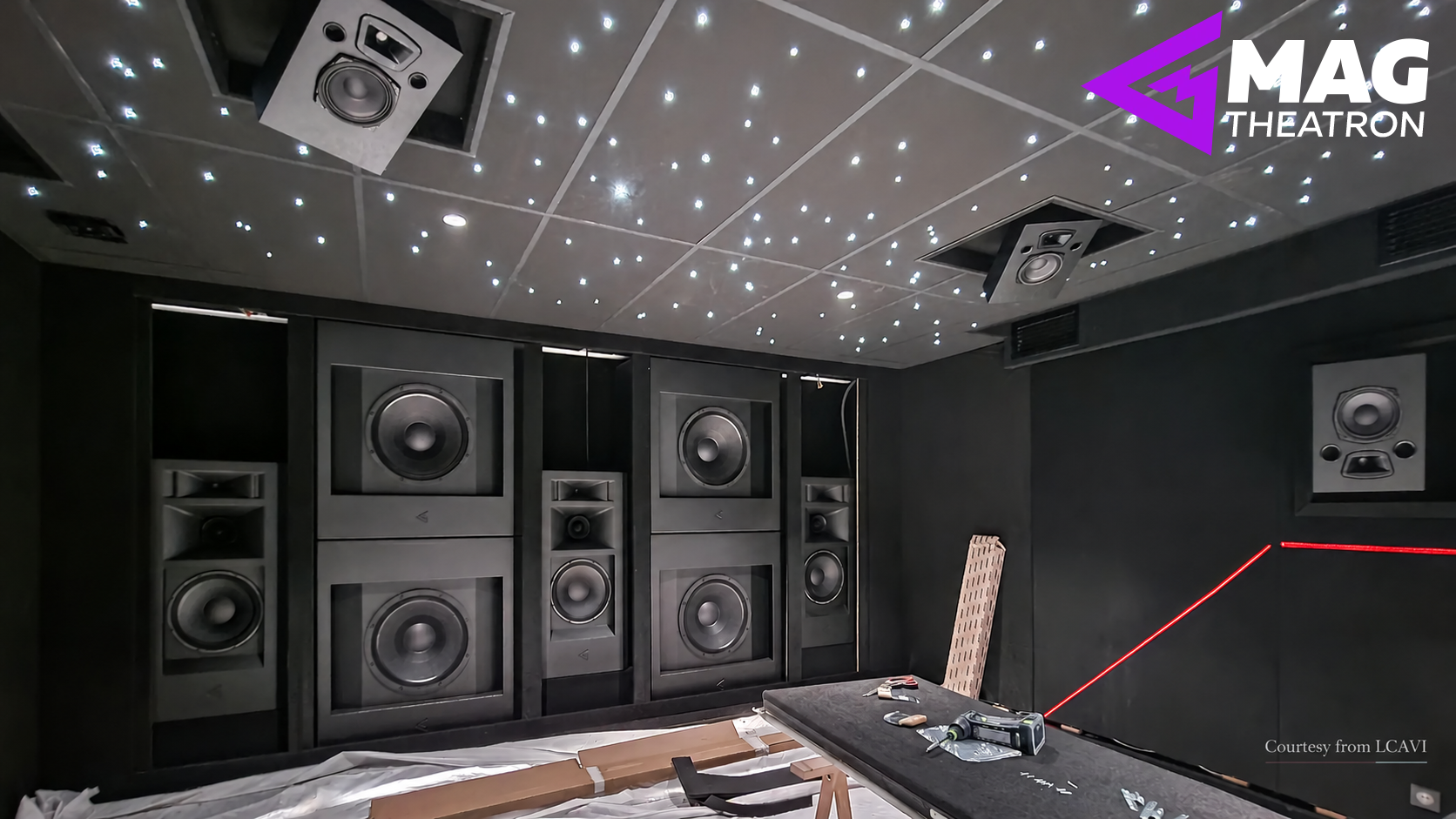
MAG Theatron loudspeakers are designed specifically for cinema applications, bringing professional cinema principles into residential environments. When properly specified, positioned and calibrated, the system can deliver high output, controlled coverage and consistent tonal performance across the listening area.
What Is the MAG Theatron Design Philosophy?
MAG Theatron systems are built on decades of professional cinema experience, with the objective of reproducing movie soundtracks with the scale, dynamics and clarity intended by the filmmakers.
Each loudspeaker is designed to provide consistent output, accurate tonality and controlled dispersion. In a properly engineered cinema, these characteristics help create more uniform coverage across multiple seats rather than optimizing the system for only one listening position.
How Do You Choose the Right MAG Theatron Speaker Layout?
The starting point for any cinema design should be the room itself.
Before selecting specific loudspeaker models, consider:
- Room dimensions and volume
- Number and position of seating rows
- Main listening distance
- Required sound pressure level
- Screen size and position
- Surround and overhead speaker coverage
MAG Theatron offers LCR, surround and height-channel loudspeakers designed for different room sizes and performance requirements.
A 7.2.4 Dolby Atmos layout may be suitable for many private cinemas, while larger rooms can benefit from configurations such as 9.2.6 or more advanced layouts when the room, processor and seating arrangement support them.
The correct channel count should therefore be determined by the room and seating geometry rather than simply selecting the largest possible configuration.
Where Should the Front LCR Speakers Be Positioned?
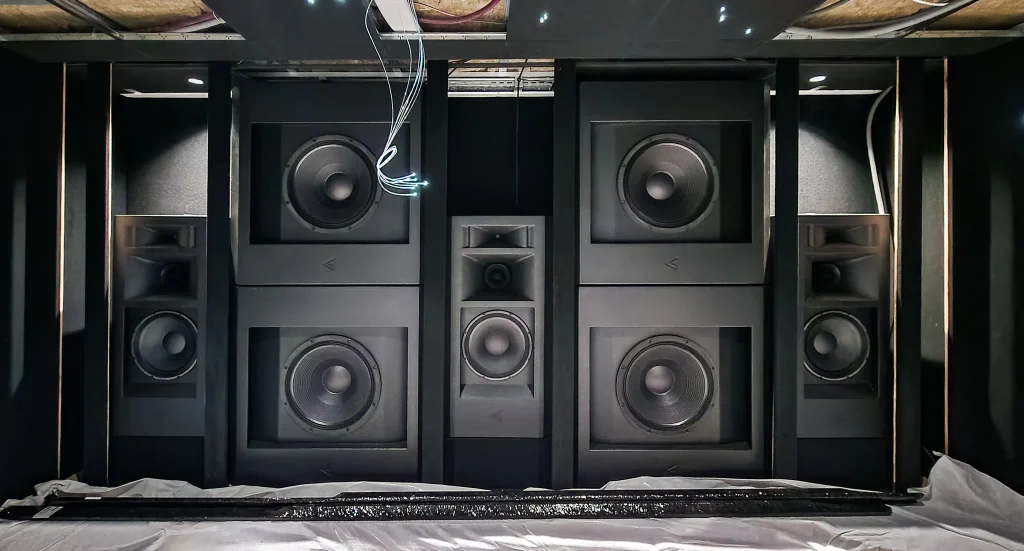
For a dedicated cinema, the Left, Center and Right speakers should ideally be positioned behind an acoustically transparent projection screen.
This allows dialogue and on-screen effects to originate directly from the picture, creating a stronger connection between sound and image.
The LCR system should be positioned according to:
- Screen dimensions
- Listening distance
- Speaker dispersion
- Required SPL
- Acoustic treatment
- Seating height
Correct positioning is particularly important for the center channel because it carries a large proportion of movie dialogue.
How Should Surround and Height Speakers Be Positioned?
Surround speakers should provide smooth and consistent coverage across the seating area without becoming excessively localized.
Their position depends on the room geometry, seating rows and surround format being used.
Atmos or other overhead speakers should be positioned to create clear separation between the ear-level and overhead sound fields. Correct spacing and aiming help the processor place sound objects accurately throughout the room.
MAG Theatron in-wall and on-wall solutions can be integrated into the cinema architecture while maintaining the required acoustic performance.
Why Are SPL and Coverage Important in Cinema Design?
A cinema system should not only be loud enough. It should deliver the required output cleanly and consistently across all seating positions.
MAG Theatron loudspeakers use high-efficiency designs that allow them to produce high output while maintaining clarity and dynamic capability.
During system design, each loudspeaker should be evaluated according to:
- Listening distance
- Required peak SPL
- Speaker sensitivity and output capability
- Amplifier power
- Dispersion pattern
- Seating coverage
The objective is to avoid a situation where one row receives significantly more level than another or where some seats fall outside the loudspeaker’s optimum coverage area.
Professional DSP calibration is then used to align levels, delays, crossovers and frequency response across the complete system.
How Should Subwoofers Be Designed for a Home Cinema?
Subwoofer design has a major influence on the impact and consistency of a cinema system.
A single subwoofer may produce strong bass at one seat while creating peaks or cancellations at other positions. For rooms with several seats or multiple rows, strategically positioned multiple subwoofers can improve low-frequency consistency across the listening area.
The correct quantity and position depend on:
- Room dimensions
- Seating arrangement
- Desired bass output
- Low-frequency extension
- Acoustic behaviour of the room
- Available installation locations
Subwoofer quantity alone does not guarantee good bass performance. Placement, timing, level matching, DSP and calibration are equally important.
For larger or more advanced private cinemas, the system design may use multiple subwoofers or engineered bass-array configurations depending on the room and performance requirements.
MAG Theatron subwoofers are designed to integrate with the rest of the cinema loudspeaker system while maintaining dynamic capability and accurate low-frequency reproduction.
Why Is Professional Calibration Important?
Even a correctly designed cinema will not reach its full potential without professional calibration.
Calibration is used to verify and optimize:
- Speaker levels
- Speaker distances and delays
- Crossover frequencies
- Subwoofer integration
- Frequency response
- Channel balance
- Bass consistency across the seating area
The objective is not simply to make the system louder or to add more bass. The goal is to create a balanced system in which dialogue, effects, music and low-frequency content work together naturally.
DCC Trading supports professional system integrators with system design guidance, recommended crossover points and tuning considerations for MAG Theatron systems.
Choosing the Right Screen and Video System
Audio and video should be designed as one complete cinema system.
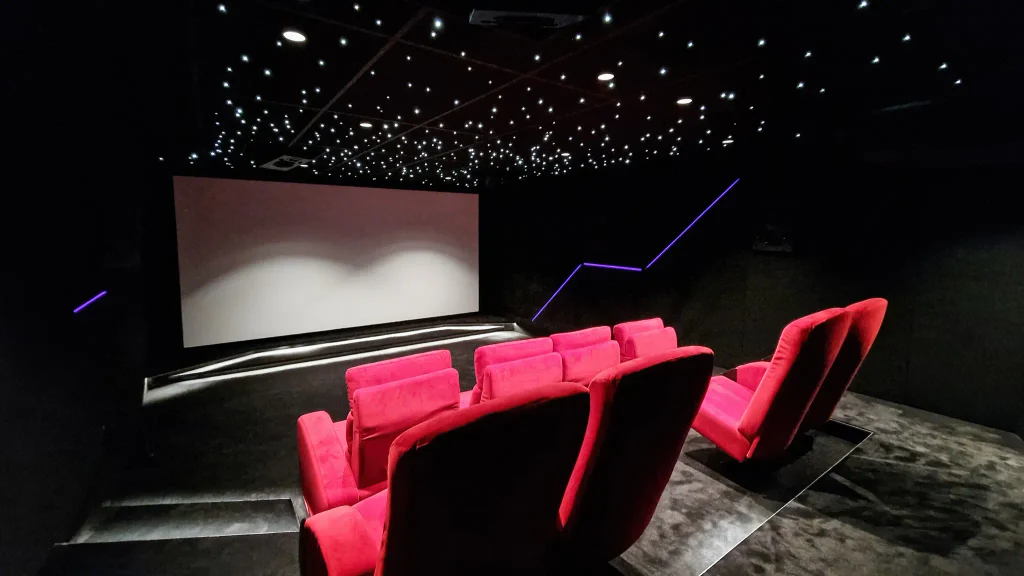
An acoustically transparent screen allows the LCR speakers to be positioned correctly behind the image without compromising dialogue localization.
MAG Theatron systems can be integrated with premium cinema technologies including Screen Excellence acoustically transparent screens and high-performance projection systems to create a complete audio-video solution.
The screen, projection system, loudspeakers, room acoustics and seating layout should all be considered together during the design stage.
Working With DCC Trading
DCC Trading works with professional system integrators and AV designers across the UAE and GCC to support MAG Theatron cinema projects.
Support can include:
- System specification
- Loudspeaker selection
- Layout and coverage guidance
- Amplification recommendations
- Crossover recommendations
- Subwoofer planning
- Technical consultation
- Commissioning support
As the exclusive distributor for MAG Theatron in the UAE and GCC, DCC Trading supports partners from the initial specification stage through system design and commissioning.
The objective is to help integration partners design cinema systems around the requirements of the room rather than simply selecting products from a catalogue.
Conclusion
A high-performance MAG Theatron cinema is the result of careful system design.
Speaker selection, placement, SPL capability, coverage, subwoofer integration, acoustic treatment and calibration should all be considered as parts of the same system.
When these elements are engineered correctly, MAG Theatron can deliver the dynamics, clarity and immersive experience expected from a professional-grade private cinema.
Planning a MAG Theatron cinema project? Contact DCC Trading for system design, product specification and technical support across the UAE and GCC.
Common questions
How do you choose the right MAG Theatron speakers for a home cinema?
Speaker selection should be based on room size, listening distance, seating layout, required SPL and coverage. The goal is to achieve consistent output and tonal balance across every seat
How many subwoofers should a home cinema use?
There is no single correct number. The quantity and placement depend on room dimensions, seating layout and performance targets. Larger cinemas can benefit from multiple subwoofers, DBA configurations or other engineered bass-array solutions
Why is professional calibration important in a home cinema?
Professional calibration aligns speaker levels, delays, crossovers, frequency response and bass integration so the cinema performs consistently across the listening area.