
Why acoustically transparent screens matter.
Learn how acoustically transparent projection screens allow the front LCR speakers to be positioned behind the image, improving dialogue localization, cinema aesthetics and audio-visual integration in dedicated home cinemas.
Key takeaways
- Acoustically transparent screens allow the main LCR speakers to be positioned behind the projected image.
- Behind-screen speaker placement improves dialogue localization and creates a stronger connection between sound and picture.
- Modern acoustically transparent materials are designed to minimize acoustic and visual compromises.
- Screen material, speaker placement and projection performance should be considered together during cinema design.
- Screen Excellence provides acoustically transparent solutions for high-performance private cinema applications.
When designing a high-performance home cinema, picture and sound should be treated as one complete system. The projection screen is not only a visual surface; it also influences how the front soundstage can be designed.
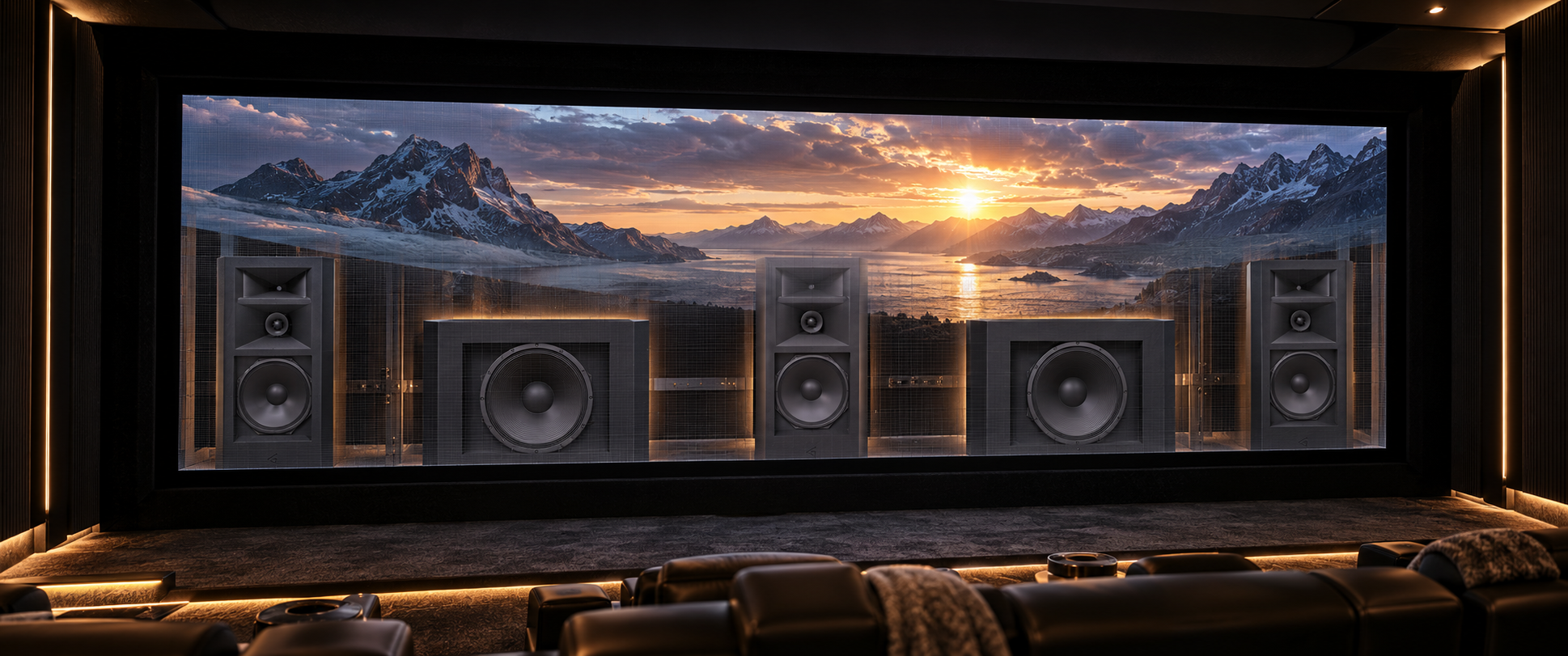
Acoustically transparent screens allow the main Left, Center and Right speakers to be positioned behind the projected image, helping dialogue and effects originate from the correct visual location while keeping the cinema design clean and integrated.
Why Put Speakers Behind the Screen?
In professional cinema design, the main LCR speakers are typically positioned behind an acoustically transparent screen so dialogue and on-screen effects originate directly from the image.
This improves the connection between sound and picture and allows the front soundstage to be positioned correctly without placing visible loudspeakers around the screen.
For dedicated home cinemas, this also creates a cleaner architectural result because the front speakers can remain hidden behind the projection surface.
How Do Acoustically Transparent Screens Work?
An acoustically transparent screen uses a specially engineered woven or perforated projection surface that allows sound from speakers behind the screen to pass through with minimal acoustic impact.
Modern screen materials are designed to maintain image quality while reducing common issues associated with older acoustically transparent designs, such as visible texture, moiré patterns or excessive acoustic attenuation.
The objective is to preserve both picture quality and sound clarity while allowing the loudspeakers to be positioned correctly behind the image.
Why Is Dialogue Localization Better?
The center speaker carries a large proportion of movie dialogue.
When the center speaker is positioned behind the screen, voices can appear to come directly from the person speaking on the image rather than from above or below the screen.
The same principle applies to the Left and Right channels, helping create a more continuous and stable front soundstage.
This is one of the main reasons acoustically transparent screens are widely used in dedicated private cinema design.
Screen Excellence Acoustically Transparent Screens
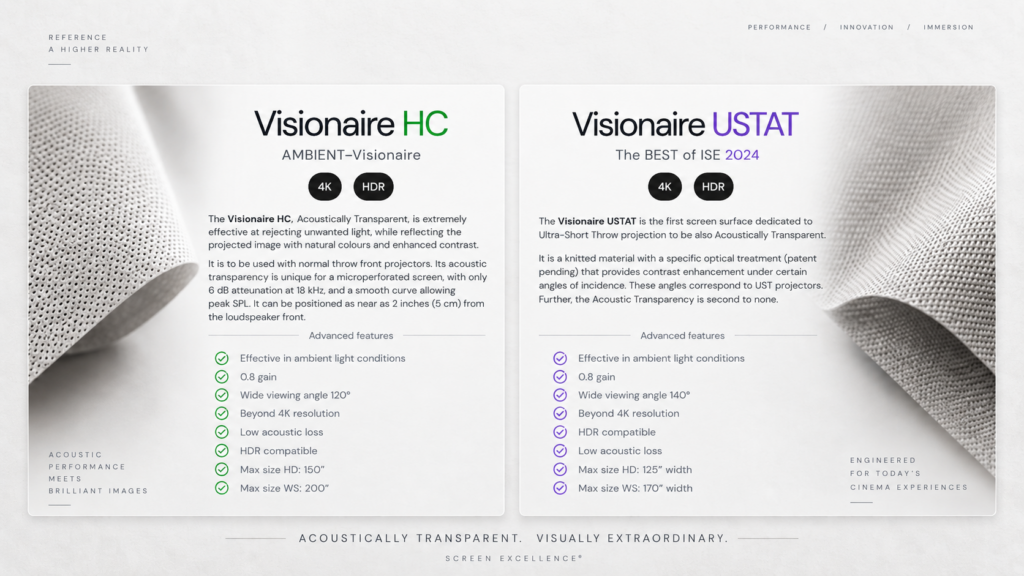
Screen Excellence develops acoustically transparent projection screens for high-performance cinema applications.
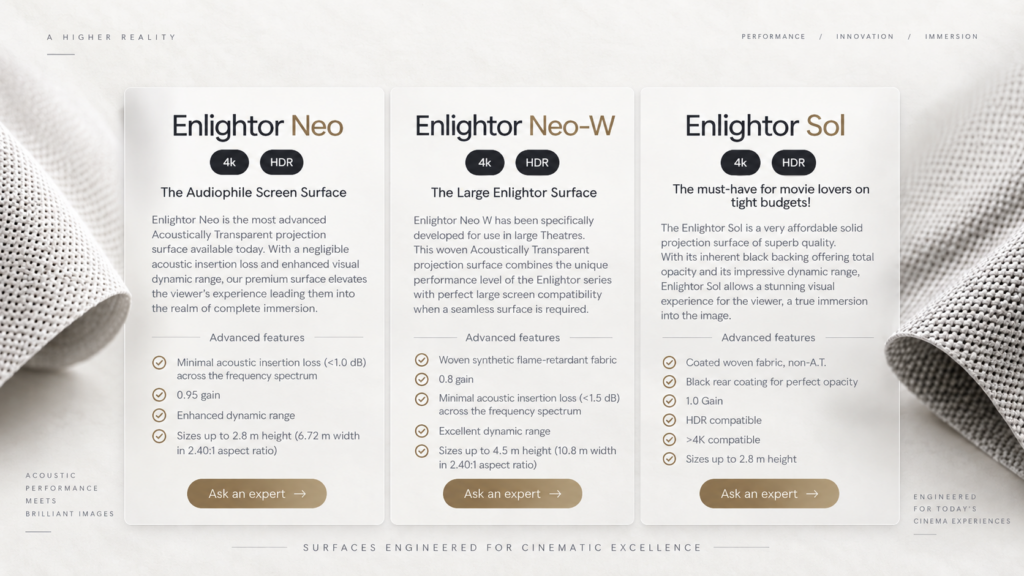
Its Enlightor screen materials are designed specifically for installations where loudspeakers are positioned behind the image, allowing system designers to combine accurate speaker placement with high-quality projection.
For professional cinema design, the screen material, viewing distance, projector performance and speaker position should all be considered together rather than treated as separate decisions.
Benefits for Home Cinema Integrators and Designers
Acoustically transparent screens provide several practical design advantages:
- Main LCR speakers can be positioned behind the projected image
- Dialogue localization can be improved
- Loudspeakers can remain hidden from view
- The screen wall can be designed more cleanly
- Larger front speakers can often be accommodated without reducing visible screen area
- Audio and video design can be integrated as one complete system
These advantages are especially relevant in dedicated private cinemas where performance and architectural integration are equally important.
Does an Acoustically Transparent Screen Affect Sound?
Every projection surface can have some acoustic effect.
High-quality acoustically transparent materials are engineered to minimize attenuation and tonal changes while allowing sound from the speakers behind the screen to pass through effectively.
Final system calibration remains important because speaker position, screen material, room acoustics and listening distance all affect the final result.
The screen should therefore be selected as part of the complete cinema design rather than as an independent component.
Working With DCC Trading
DCC Trading supports professional system integrators, AV designers and cinema specialists across the UAE and GCC with Screen Excellence product selection, system design guidance and project support.
By combining Screen Excellence acoustically transparent screens with correctly positioned cinema loudspeakers and professional calibration, integrators can create private cinema systems where picture, sound and architecture work together as one complete experience.
To learn more about Screen Excellence acoustically transparent screens or to discuss a home cinema project, contact DCC Trading.
Common questions
What is an acoustically transparent screen?
An acoustically transparent screen is a projection surface designed to allow sound from speakers positioned behind it to pass through while maintaining the visual image.
Why are speakers placed behind the cinema screen?
Placing the main speakers behind the screen helps dialogue and effects originate from the image itself, creating more accurate localization and a more natural cinema experience.
How do acoustically transparent screens improve home cinema design?
They allow the front speakers to be hidden behind the projection surface, improving aesthetics, dialogue localization and integration between the audio and video system.